
Re: A news item and subject which I just want to check out (184) December 26, 2025
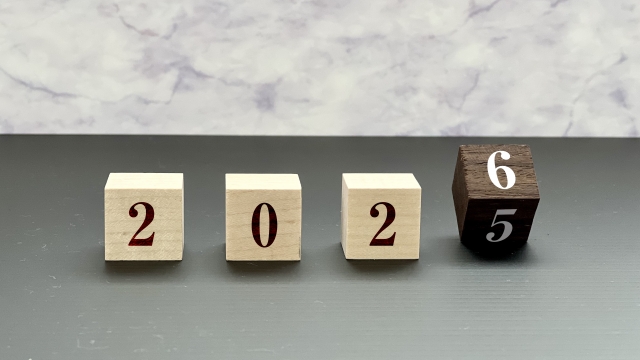
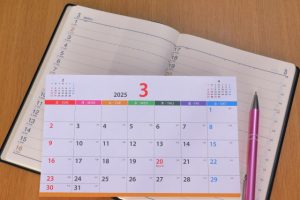
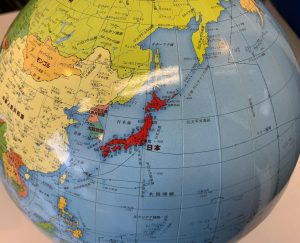
Christmas has passed, and now there is less than a week left this year. In Japan, the year-end and New Year period is a holiday, but as “a national holiday”, only January 1, New Year’s Day, is officially recognized, and the rest depends on decisions made according to usual practices and customs of each company or organization. For your information, financial institutions are closed from December 31 to January 1 under the Banking Act. In addition, from the end of this year to the beginning of next year, due to the way the calendar falls, it seems that many companies and organizations will have a long holiday of nine days from December 27 (Saturday) to January 4 (Sunday).
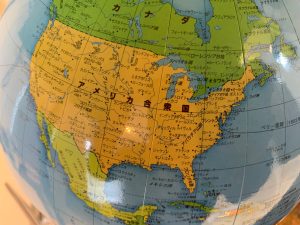
On the other hand, in the United States, December 25 is a Christmas holiday (federal holiday), but the holidays before and after it, as well as the New Year holidays, are at the discretion of individual companies and individuals. However, this year, as a special measure, the federal government has designated a three-day “federal holiday (holiday for federal employees)”, including the days around Christmas (December 24 and 26). Financial institutions (banks, securities and so on) operate as usual on December 31, are closed on January 1 (New Year’s Day) for the federal holiday, but seems to resume normal operations from January 2 onwards.
Furthermore, from a global perspective, the majority of countries and regions officially cerebrate New Year on January 1, but there are also many cultures and regions where traditional and religious New Year celebrations are highly valued. For instance, China, Korea, Vietnam, Taiwan and so on celebrate the Lunar New Year (Chinese New Year). New Year’s Day varies depending on the year, and next year it will be February 17 (Tuesday). In Asian countries where many overseas Chinese live, including China, there will be a holiday from around February 15 to around February 23, and economic activities nearly come to a halt. And there are various New Year celebrations based on religious or unique calendars, such as the Islamic calendar and the Jewish calendar.
When travelling abroad, if you don’t research the culture and customs of the destination country in advance, you may encounter unexpected issues during travel or sightseeing.
■■What I thought and focused on near the end of the year:
■Top 10 domestic and international news stories of the year:
Looking back, there were various happenings this year. Looking at the top three of Yomiuri Shimbun’s annual “reader-selected top 10 news stories”, the domestic rankings were as follows. 1)The Osaka-Kansai Expo 2) Following a series of bear attacks, “emergency culling with firearms” has begun 3) Mrs. Sanae Takaichi won LDP leadership election and became the first female prime minister. And the international rankings were as follows. 1) Mr. Trump was inaugurated as the 47th President of the United States 2) China called for travel restrictions in response to Prime Minister Takaichi’s reply 3) The United States announced reciprocal tariffs; Japan 24%, China 34%.
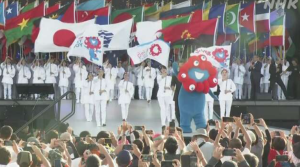
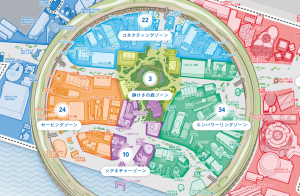
The Expo, which ranked first domestically, faced many negative campaigns when it opened in April, and there were concerns about what would happen, but as it entered its later stages and its contents became better understood, its popularity grew rapidly, and it concluded with great success on October 13 (There were about 25.6 million visitors and economic impact according to government estimates was 3.6 trillion yen). And Mr. Trump’s presidential inauguration, which ranked first internationally, is unanimously agreed upon, but over the past year, the whole world has been swayed by his words and actions. He still has three years left in his term, but people are probably “already fed up” with his whims and arrogance. In various regions and countries, there is also a phenomenon of moving away from the United States as a “friendly nation”.
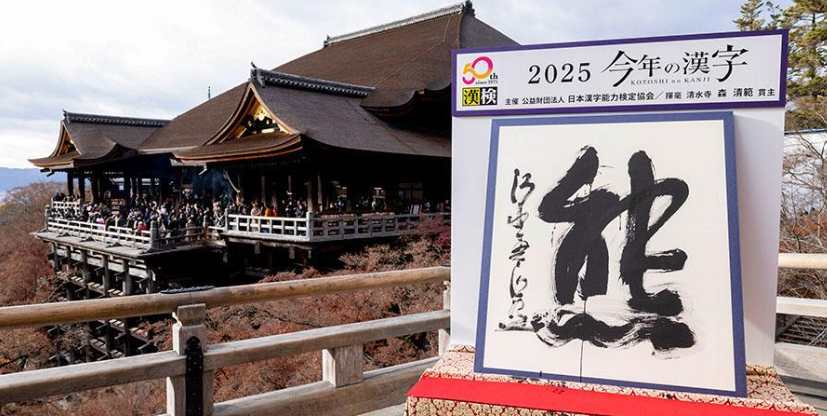
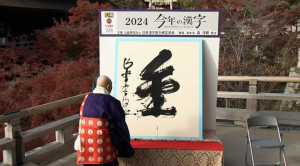
And the kanji representing this year was chosen as “熊 (bear)” and was brush-written by the chief priest of Kiyomizu Temple. Bears have appeared in various areas and caused harm to residents, and it seems to have drawn attention to pandas, often written as “a bear like a cat” in China. My prediction was “米” (The United States is written as “米国” in Japanese, and “米” also means rice in Japanese and rice shortage and price surge), but it seems that the damage caused by the “bears” had a stronger impact. By the way, “熊” is bear in English, and the adjective ‘bearish’ in the New York stock market means a pessimistic or declining prediction, and it is not very welcome. The opposite optimistic or upward prediction is called bullish (derived from ‘bull’).
■The Takaichi administration has started:
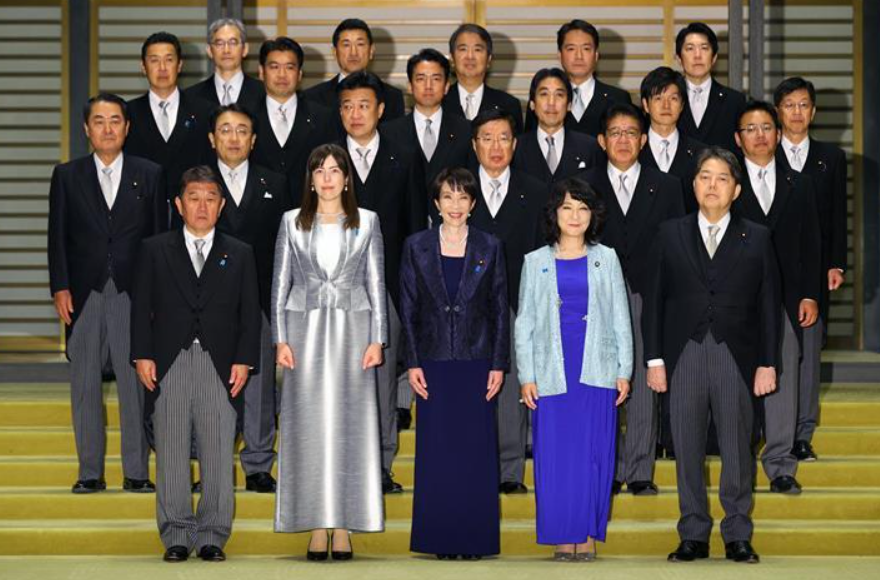
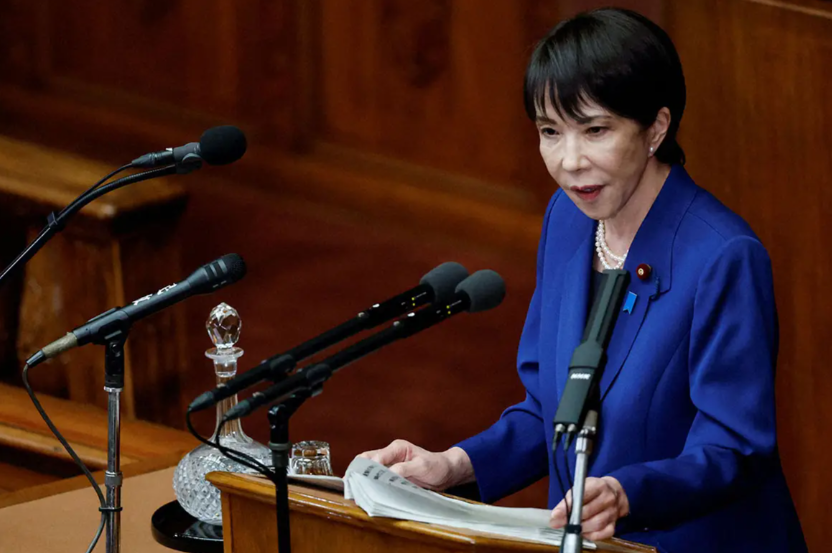
Two months have passed since the birth of the first female prime minister in our country’s constitutional history on October 21. Generally speaking, the first three months after a new administration takes office are considered a honeymoon period, during which high approval ratings are maintained. The Takaichi administration’s approval ratings in recent newspapers have generally exceeded 70%. In addition to the freshness of being the first female prime minister replacing an unpopular predecessor, unlike the uniform dark suits, there is a smile and charm, and her earnest attitude toward work is appreciated, and she seems to particularly resonate with the younger generation. Like this, at present, approval ratings for the Takaichi administration are high, but from now on, in addition to foreign policy, economic policy will become the most important issue. The evaluation of the supplementary budget (18.3 trillion yen) that was recently approved and the new fiscal year’s budget plan (122.3 trillion yen, the largest ever), which will be decided soon, depends not only on public opinion but also on the movements in the market (finance, securities, and foreign exchange markets). The rise in long-term interest rates and the yen exchange rate reflect concerns about “fiscal discipline”. A true politician does not hesitate to make the people swallow “bitter medicines” when necessary. From now on, the administration will enter a critical period after the honeymoon phase. I hope the administration will do its best.
■Japan-China relations:
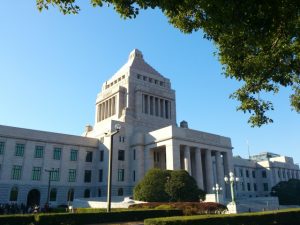
Prime Minister Takaichi got off to a good start diplomatically, attending various international conferences at just the right time soon after taking office. However, as you know, regarding China, the statements made by Prime Minister Takaichi in the Diet have heightened tensions, raising concerns that Japan-China relations may remain in a prolonged deadlock. On the other hand, President Trump is shifting his policy toward China from the traditional confrontation and rivalry to coexistence and appeasement, so to speak, prioritizing practical benefits while separating politics and economy. And he is trying to maintain the current situation while seeking to freeze the status of the Taiwan issue. Unlike Japan, this is possible because the United States has the world’s strongest military and economic power backing it. Considering the above, things are progressing between the United States and China over Japan’s head, making Japan’s position more difficult. And Asian countries (except for the Philippines and Taiwan) are deepening their economic and trade relations with China, while facing territorial and maritime disputes. For instance, in the automobile industry, Japan’s stronghold is being eroded by the rise of electric vehicles.
Furthermore, according to the Japan-China joint public opinion survey conducted from October to November 2024, before this conflict, and published in December of the same year, on the Chinese side, 88% of reply, including those who said “somewhat”, gave a “negative” impression of Japan, while 89% of reply on the Japanese side gave the same answer to the same question. The mutual dislike of China and Japan among both peoples is roughly at the same level. It seems that deep-rooted historical issues and the release of treated water from the Fukushima No.1 nuclear plant influenced the Chinese side. However, given the developments in U.S.-China relations and the need to carry on the late Prime Minister Abe’s “diplomacy that takes a global perspective”, there is no way Japan-China relations can be left as they are. This is not the time to be talking about being pro-China or anti-China. However, the Takaichi administration has extensive connections with Taiwan, but lacks a channel to the current Chinese government. Prime Minister Takaichi’s capability will be tested on how to overcome this reality.
■Victims of unreasonable accidents and significant decline in morals (social norms):
There were various natural and man-made disasters this year. Among them, man-made disasters almost always involve some form of “human error”. There were notable cases in which precious lives were taken for unreasonable reasons beyond the individuals’ own fault. 1) Driver dies due to road collapse in Yashio City, Saitama prefecture in January 2) Fatal elevator fall accident in Kobe in February 3) Death of a couple in a sauna fire in Akasaka, Tokyo in December.
What we should learn from these kinds of cases is that the “myth of security” in Japan is now obsolete, and we are required to protect ourselves. And it is only a small part of the whole, but the decline in the morals of police officers and teachers is truly sad. It is extremely regrettable that Japan, in exchange for economic prosperity, has lost much, including “family bonds”, and “virtues and ethics” passed down from ancient times.
■■Year-end greetings:
This is the last blog streaming this year, and the first issue of next year is scheduled for January 9. Thank you very much for reading my blogs throughout this year. At this time of the year, I sincerely hope that you take good care of yourselves and welcome a brilliant New Year.