
Re: A news item and subject which I just want to check out (187) February 6, 2026
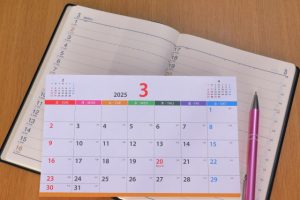
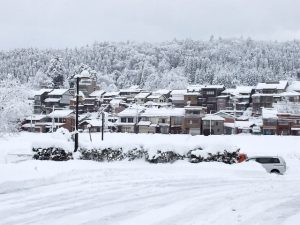
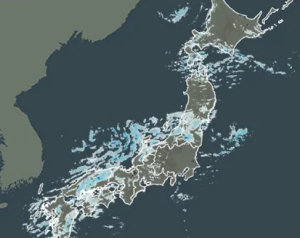
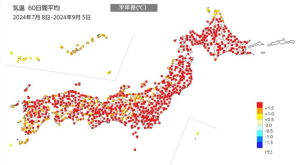
February has begun, and Setsubun (February 3) and Risshun (February 4, the end of cold winter) have passed in the blink of an eye, and according to the calendar, spring has already arrived. But record-breaking heavy snowfall is affecting traffic across the country, and there have been a series of injuries and deaths caused by snow shoveling and snow removal.
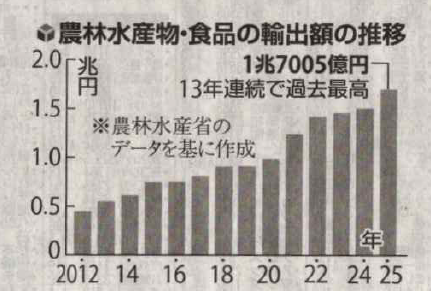
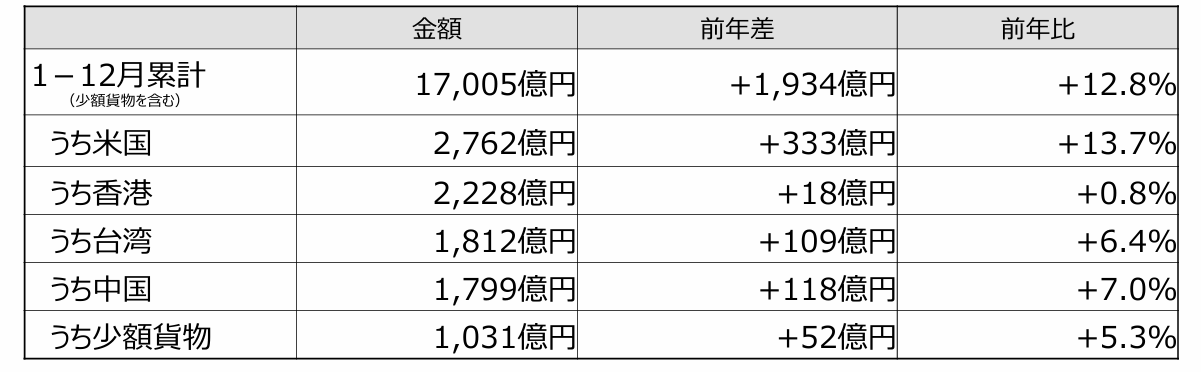
By the way, according to the Ministry of Agriculture, Forestry and Fisheries, the export value of agriculture, forestry, and fishery products and food in 2025 reached 1.7 trillion yen, a 12.8% increase from the previous year. Although the government’s target of 2 trillion yen for 2025 was not met, it marked the 13th consecutive year of record highs. The top export destination was the United States, and exports increased by 13.7% to 226.2 billion yen. It seems that the popularity of Japanese foods, such as Japanese green tea and beef, is increasing. Hong Kong, Taiwan, China, and South Korea were ranked below second place. Among them, what draws the most attention is that green tea showed the largest growth, nearly doubling from the previous year to 72.1 billion yen. Our country’s exports have traditionally dominated by hard goods (heavy chemical industry products) such as automobiles, steel, machinery, and chemical products, but all of these have reached the ceiling. As a trump card for the next generation, it will likely be possible to find a way forward by expanding exports of agricultural, livestock, and marine products (specialty goods), as well as soft sectors like anime and games.
■■What I have recently thought and focused on:
■The House of Representatives election is in full swing:
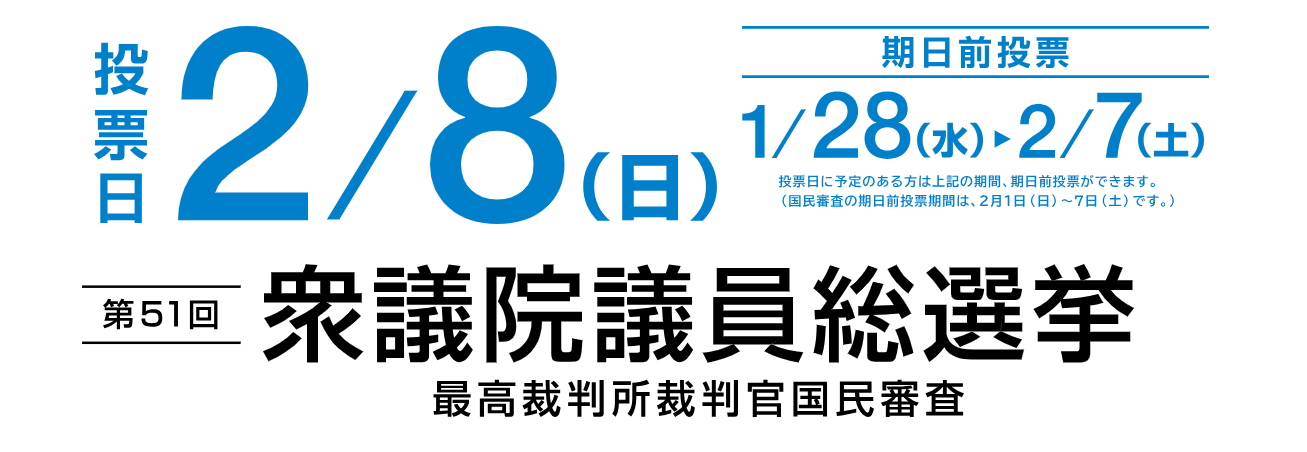
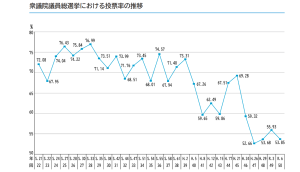
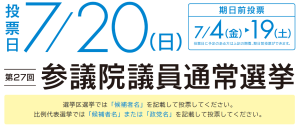
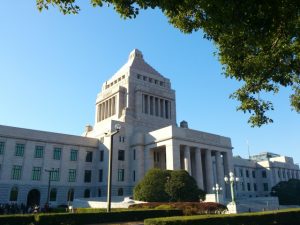
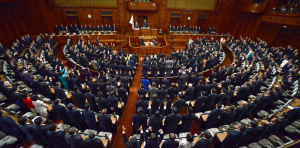
The House of Representatives election, officially announced on January 27, is now in the midst of an intense 12-day campaign, the shortest since the end of the war, leading up to the vote on February 8 (Sunday) this weekend. This House of Representatives election is the 51st in 81 years since the end of the war, and if we include the House of Councilors election, it is the 78th national election. As I mentioned in the previous issue, there are far too many national elections in Japan. On top of that, this time, it involves a huge government expenditure of 85.5 billion yen.
On the other hand, in the United States, the presidential election is held every four years. And the Senate, which is similar to the House of Councilors in Japan, has 100 seats, with two senators elected from each state. They serve six-year terms, and about one-third of the seats are up for re-election in the midterm elections held every two years. And the House of Representatives, corresponding to the House of Representatives in Japan (with 435 seats), is apportioned according to the population of each state, and all members are up for re-election in the midterm elections held every two years. However, in Japan, the House of Councilors has a fixed term of six years, with half of its members being up for election every three years, but regarding members of the House of Representatives, any dissolution other than the expiration of their four-year term is solely at the discretion of the Prime Minister, and it is not too much to say that the timing of dissolution is decided in a way that benefits one’s own side. This time, she is citing that “asking the people to judge her own policies” is the reason for dissolution, but it can’t be helped if it is seen as a “surprise dissolution” backed by her high approval ratings. Prime Minister Takaichi, who looks up to the late Prime Minister Abe as her mentor, seems to possess both considerable courage and shrewdness. This can also be considered an essential quality for aiming for a long-term administration.
Even so, with elections happening this frequently, and in the current era of multiparty politics, it tends to lead to what is called populism. The late Prime Minister Kakuei Tanaka once aptly said, “Even if a monkey falls from a tree, it is still a monkey, but if a politician falls, he becomes an ordinary person.” However, when the priority becomes protecting one’s parliamentary badge or increasing one’s party seats at all costs, they lose sight of the direction of the nation.
The burden falls back on the people themselves in the end, so it is important to make calm decisions without being swayed by appealing campaign promises.
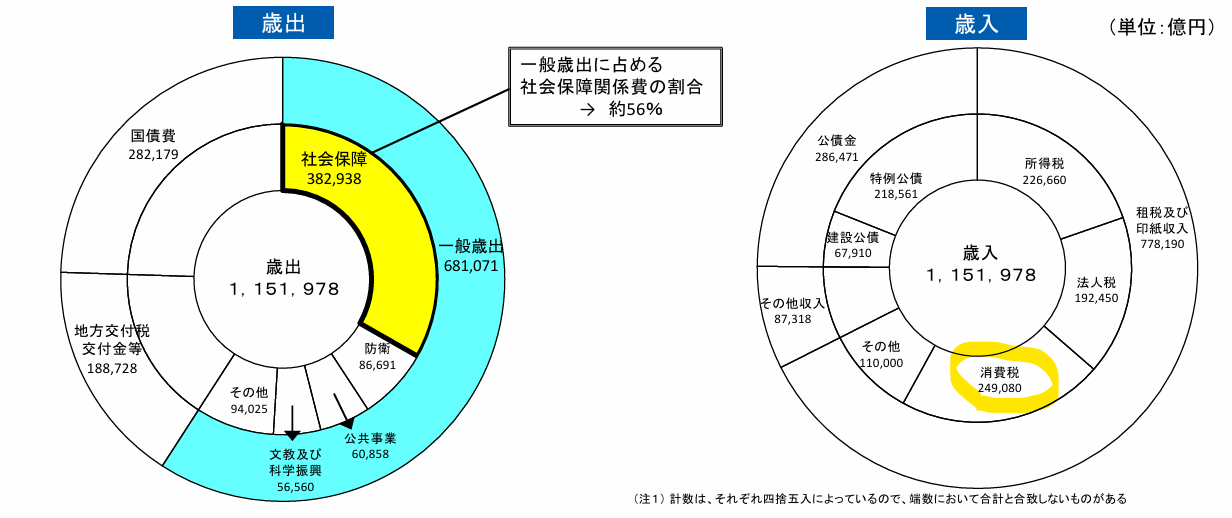
For instance, one of the issues in this election is the consumption tax cut. The consumption tax was introduced in 1989 (at 3%), but predecessors, at times risking their own political careers, repeatedly revised it several times, leading to the current 10% (standard tax rate), which has now become the cornerstone of social security policy. Considering the history so far, one should not lightly discuss tax cuts or abolition as an election strategy.
Furthermore, while the Prime Minister considers a consumption tax cut as a “long-cherished desire”, she is also using her position as president of the Liberal Democratic Party to “accelerate deliberations at the national assembly”. It seems that the decision depends on the election results. The key point is that she is not “promising tax cuts” and being “vague”.
In terms of diplomacy, a major challenge is how to align with the United States strategy (shift) toward China and how to deal with China, which is increasingly strengthening its offensive.
■Working hours regulations and an expansion of the discretionary labor system:
In the amended Labor Standards Act that came effect in 2019, overtime hours exceeding the statutory working hours (8 hours a day, 40 hours a week) were generally capped at 45 hours per month and 360 hours per year. (Truck drivers, construction workers, doctors and so on are subject to different regulations.)
In response to this, business organizations are requesting an expansion of the “discretionary labor system”, in light of the current severe labor shortage. On the other hand, the labor side has expressed opposition, stating that it could lead to death from overwork.
The “discretionary labor system” is a system in which, regardless of actual working hours, the time agreed upon in advance by labor and management is considered working hours, and it entrusts workers not only with how to allocate their time but also with how to carry out their work.
For your information, what I heard when I was once involved in the trucking industry was that during job interviews, young people would say “I am fine with a salary similar to other companies, but I hope for less overtime and more days off”. Because, these days, there are many so-called power couples where both spouses work, I think it may be an expression of the desire “to spend as much time together as possible”.
On the other hand, among drivers around the age of 50, it is also true that many have a strong desire “to earn more while they can”, due to “preparing for future uncertainties”, “improving their standard of living”, and “childcare expenses and nursing care expenses”.
Like this, nowadays, attitudes and values toward work are becoming more diverse. And considering that people have differences in physical strength, willingness to work, values, and living conditions, I think it might be impossible to regulate the labor system uniformly with a single law.
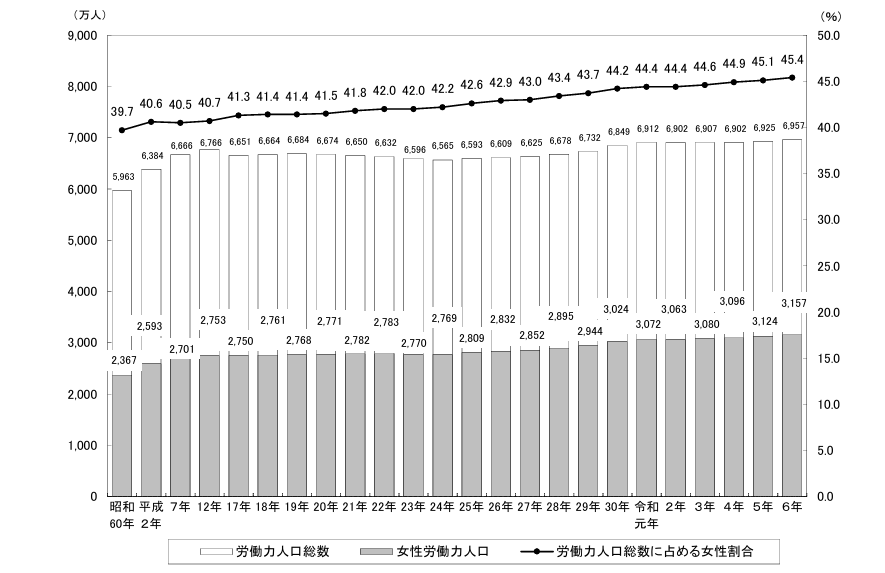
By the way, the average annual working hours per person in Japan (including overtime) in 2024 was 1,643 hours. This was less than the United States (1,796 hours). Of course, in the background of this, there are workers (part-time and non-regular) who limit their working hours due to the “barriers in taxes and social insurance”.
In Japan, labor shortage is becoming increasingly severe. And wage increases to retain employees are also putting pressure on management. Last year, the number of bankruptcies caused by these factors reached a record high for the third consecutive year. Most of them are small and medium-sized enterprises. And the debate over accepting foreign workers is heating up now. In order to promote the orderly acceptance of foreign workers, should we expand the “discretionary labor system” and eliminate the “barriers in taxes and social insurance”, and aim to ease the labor shortage?
■Successful trial mining of rare earth mud from the seabed of Minamitorishima:
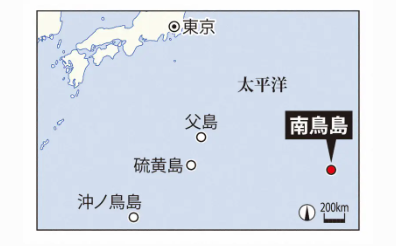
The Cabinet Office announced that, as part of a large-scale research project (Japan Agency for Marine-Earth Science and Technology), it succeeded in recovering mud during trial mining of rare earth from a depth of 5,700 meters on the deep-sea floor using the deep-sea exploration vessel “Chikyu”. Minamitorishima is an uninhibited island belonging to Ogasawara village, Tokyo, located in the easternmost point of Japan, about 1,900 km from Tokyo. It is said that there are at least 16 million tons of rare earth deposits around the island, which could meet the world’s demand for several hundred years. As the next step, in February 2027, it is scheduled to collect up to 350 tons of mud per day.
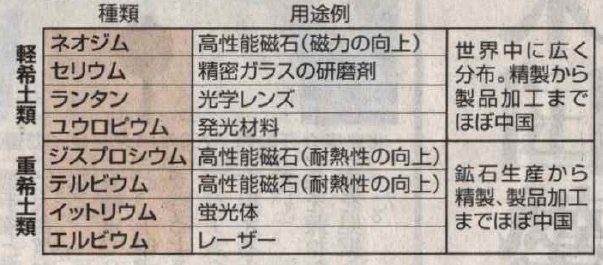
However, the issue is the cost and profitability required for mining, transportation, and processing. Although the trial mining was successful, it is said that the hurdles to commercialization are high. Rare earths are distributed around the world, but currently China controls about 70% of the world’s mining output and about 90% of the world’s refining output.
By doing so, China controls supply and pricing, using it as a diplomatic trump card against the United States, Japan, and others. Because extraction and processing place a high burden on the environment, some developed countries have stopped production or strengthened regulations, which has also accelerated the trend of concentration on China. It is necessary to be prepared for the possibility that China, as it has done in the past, may try to shake things up with significant price cuts when the times comes.