
Re: A news item and subject which I just want to check out (186) January 23, 2026
A new year has begun, and it is already late January. Even so, January feels a bit long because there are many events, but February and March pass in the blink of an eye, just as they are called to “run away and leave”. The flow of time can’t be stopped for even a single moment, and looking back, before I knew it, I am over 80 years old. It is truly “Time flies like an arrow; Youth fades quickly, but learning is difficult to achieve”. I hope you “cherish each and every day”.
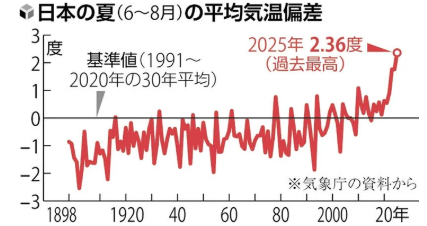
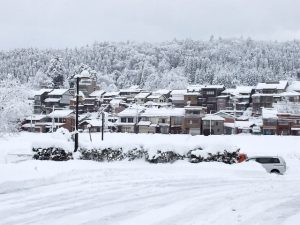
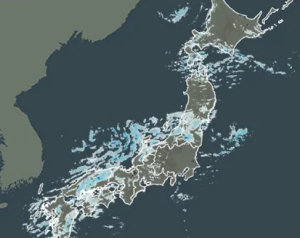
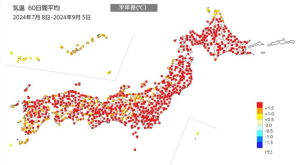
By the way, last year’s global average temperature was 1.47 degrees higher than during the Industrial Revolution (around the 1760s), and it is said to have been the third hottest summer in history. But things have completely changed now. According to the Japan Meteorological Agency, from 21 to 25 this week, a rare cold wave, “occurring maybe once every few years”, is expected to bring the risk of heavy snow, and there are concerns about the impact on traffic and logistics.
In addition, earthquakes that make the news occur somewhere in the country almost every day, and geopolitical risks are also increasing globally. These days, our lives have seemingly become more convenient thanks to IT, AI and social media, but I feel nostalgia for my childhood when time passed leisurely without such things, and for the days when insects and small animals (snake, frog, lizard, river fish and so on), now gone from our surroundings due to urbanization and environmental destruction, were still present.
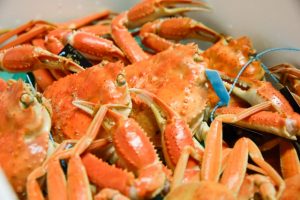
By the way, this week, I joined a day trip to Kinosaki Onsen on the Sea of Japan side of Hyogo prefecture to enjoy the winter delicacy, “Matsuba crab”. It had been several decades since I last visited the place. It is about 2 hours and 40 minutes by limited express from Osaka via the Fukuchiyama Line and Sanin Line. There are various kinds of crab, and Shanghai crab is also famous and I have eaten them several times, but “Matsuba crab” (officially called snow crab, and known as Echizen crab in some areas) is definitely the best. I felt glad to have been born in Japan. The return trip was a flight of just about 30 minutes from Kounotori Tajima airport in Toyooka, Hyogo prefecture, to Itami airport.
■■What I have recently thought and focused on:
■Dissolution of the House of Representatives and House of Representatives election:
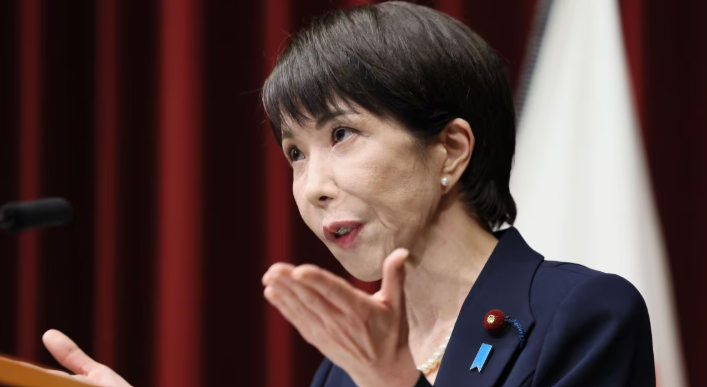
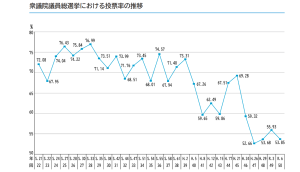
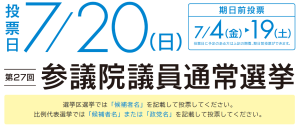
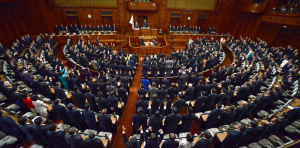
Prime Minister Takaichi announced that she will dissolve the House of Representatives at the beginning of the ordinary Diet session convened on January 23. Along with that, the House of Representatives election (with 465 members) will be officially announced on January 27 (Tuesday) and the voting will take place on February 8 (Sunday). The previous House of Representatives election was held on October 27, 2024 (with a term of four years until October 26, 2028), and there was the House of Councilors election last July. Including this House of Representatives election, there will have been three national elections within a period of one year and three months. This makes it seem as if politics is only being done between elections. Inevitably, it will be the same this time, and as an election strategy, there tends to be a lean toward populism such as consumption tax cuts.
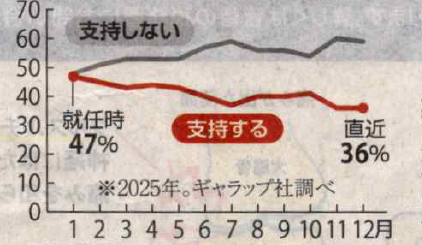
Prime Minister Takaichi seems to have high approval ratings (popularity) for her character and work performance, but the market’s reaction to the proactive fiscal policies advocated as a policy seems to be one of strong caution, as reflected in the yen exchange rate and long-term interest rates. And in terms of diplomacy, Japan-China relations are at a stalemate, and the effects of this are beginning to surface.
In addition, in Japan, the heads of local governments are elected through direct elections in their respective electoral districts. The U.S. presidential election is an indirect and direct election in which voters choose electors (538 in total) who have already decided which candidate they will support in each state. However, the Prime Minister of Japan operates under a parliamentary cabinet system, where the decision is made by members of parliaments rather than being directly elected by the people (Recently, party member votes also influence the selection). Accordingly, the qualifications of members of parliaments are extremely important. Therefore, I think we should place more emphasis on evaluating candidates themselves, such as providing opportunities for debates between candidates in each electoral district.
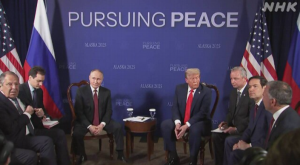
■One year has passed since Mr. Trump was re-inaugurated as president:
July 4, 2026 marks the 250th anniversary of the founding of the United States. I visited the United States in the year of its 200th anniversary, so it is deeply moving to think that “50 years have passed since then”.
By the way, one year has passed since Mr. Trump was re-inaugurated as president on January 20, 2025. Even so, just how strong is this person’s desire for self-exhibition and fame? Comments in the media tend to have a harsh tone.
In addition, the powers of Congress are listed in detail in the United States Constitution, but it seems that the description of presidential powers is kept brief and abstract. According to experts, it is a “system that heavily depends on the self-restraint of person in power”, and it is said that successive presidents have maintained restraint by not crossing certain lines, which has functioned as a “guardrail” protecting democracy.
However, President Trump completely disregarded such concerns, even going so far as to declare “I don’t need international law”, and proceeded with a sudden military action against Venezuela. Furthermore, recently, he has been arguing for the “necessity of possessing Greenland for national and global security”. However, while officially citing security concerns, the real intention is said to be obtaining oil from Venezuela (which has the world’s largest reserves) and rare earths from Greenland, which ranks 8th in the world with 1.5 million tons of reserves. At this point, it can’t be helped if it is called imperialism.
On the other hand, although his approval rating in the United States has generally been declining, he still retains a solid base of support. Underlying this is a sense of unfairness that “immigrants”, “liberal elites”, “China”, and “allied countries” are unjustly exploiting their wealth and profiting from it. He skillfully captured such frustrations with the simple catchphrase “MAGA” (Make America Great Again), boosting his support.
President Trump has three years left in his term. The global situation remains uncertain, depending in part on the results of midterm elections to be held this November.
■The Chinese economy is in a tough situation:
In China’s 15th five-year plan, which begins this year, there is a view that China is now more consciously focused on “war preparations” (war mobilization capacities) than ever before. Mr. Minxin Pei, a famous researcher on China, says that the reason is that, while the Chinese Communist Party has previously used the phrase “peace and development” as a standard expression when presenting its understanding of world situation, this phrase is absent from the current plan.
In addition, the National Bureau of Statistics of China recently announced that the real GDP for 2025 increased by 5.0% compared to the previous year. Although it achieved around 5% of the government’s target, the growth rate of nominal GDP, which is closer to people’s actual experiences, remained at 4.0%, marking the third consecutive year of “nominal-real reversal”.
For your information, the wholesale price index in December last year fell 1.9% compared to the same month of the previous year, marking the 39th consecutive month of decline and indicating a state of deflation. The prolonged downturn of the real estate market, decline in private sector investment appetite due to weak domestic demand, and price competition arising from excess supply capacity have been cited as factors weighing on the economy. And the export of surplus products at low prices (deflation) has increased, causing the friction with the counterpart countries.
On the other hand, China is focusing on increasing its power generation capacity and plans to raise it to 1.5 times the 2024 level by 2030. And the annual power generation in 2025 is said to be 10 trillion kw, about 2.4 times that of the United States and about 10 times that of Japan. The driving force is renewable energy such as solar and wind power. And there are about 60 nuclear power plants currently in operation, with a total generating capacity of about 6.4 million kw, and additional 27 plants under construction. The goal is to set the share of nuclear power plants in the energy mix to 10% by 2040, doubling it from just 5% in 2024.
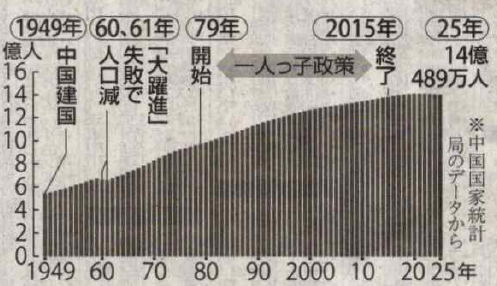
In addition, China’s total population as of the end of 2025 has declined for the 4th consecutive year, reaching 1,404.89 million (about 11.4 times that of Japan), down 3.39 million from the end of 2024. And the number of births in 2025 was 7.92 million (about 11.9 times that of Japan), down 1.62 million from the previous year, setting a record low since the country’s founding in 1949, and decreasing by nearly 60% compared to the most recent peak in 2016. The worsening employment situation due to the economic stagnation and anxiety about the future are leading to a decline in the number of marriages.